
At the same time, seven companies from the coveted list witnessed a decline in their market valuation last week, but their cumulative loss of Rs 37,701.1 crore was less than the total gain made by three firms.
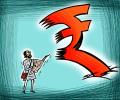
Foreign investors have continued selling in the Indian market, pulling out a massive Rs 85,790 crore (around $10.2 billion) from equities this month due to Chinese stimulus measures, attractive stock valuations, and the elevated pricing of domestic equities. October is turning into the worst-ever month in terms of foreign fund outflows. In March 2020, FPIs withdrew Rs 61,973 crore from equities.

If a 5% to 10% fall in the equity market gives you sleepless nights, you are not cut out for a 75% to 80% allocation to equities and must reduce it.

Though most analysts expect the global central banks to keep the liquidity tap open, valuations of Indian markets, they say, are beginning to look stretched. Against this backdrop, they remain cautious, with some even expecting a minor correction from here on.
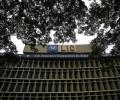
The government is unlikely to come up with the IPO of Life Insurance Corporation (LIC) in the current financial year ending March 2022, as the valuation of the state-owned behemoth is taking more than anticipated time, and the preparatory work is still far from complete. There are still some issues that need to be addressed with regard to the valuation of LIC, a senior official of one of the merchant bankers said. Even after the valuation, there are several regulatory processes that have concluded, the official said.

The number of dematerialised (demat) accounts required to hold shares and other securities in electronic format rose by 3.1 million in April, bringing the total tally to a fresh record of 154.5 million. Since December last year, the new additions have consistently remained above the 3 trillion mark, a sign that the stock markets continue to attract new investors despite a spike in volatility.

The exodus of foreign investments from Indian equity markets continued unabated, with FPIs pulling out nearly Rs 20,000 crore in the last five trading sessions on higher valuations of domestic stocks and shifting their allocation to China. As a result, foreign portfolio investors (FPIs) have turned net sellers in the equity market, with total outflows reaching Rs 13,401 crore for 2024 so far. Going ahead, the FPI selling trend is likely to continue in the near term till data indicate the piossibility of a trend reversal.

Smaller stocks continue to shine at the bourses. The BSE MidCap index is up 18 per cent since the beginning of January this year against a 5 per cent rise in the Sensex during the period. With the current rally, the mid-cap index has doubled in value since the end of March 2020 against a 70 per cent rally in the Sensex during the period. On Tuesday, the mid-cap index closed at 21,232, as compared to 17,941 at the end of December 2020. In the same period, the benchmark index moved from 47,751 to 50,193.

'Rather than taking a very short-term view on the markets, equity investing should be premised on longer term growth opportunities.'

'Retail investors have to stick to their asset allocation plans and continuously do portfolio reviews.'

A sharp sell-off in the Indian equities markets after a spike in crude oil prices should not be surprising. Historically there is a negative correlation between stock valuations in India and the price of Brent crude oil, which is the benchmark for the Indian crude oil basket. Between 2011 and 2014, crude oil traded above $100 a barrel for an extended period, the Sensex-trailing price/earnings (P/E) was 18X, on average, during the period, nearly 22 per cent lower than the current index P/E of 23X.

Data centres are increasingly becoming a key part of the real estate landscape, as reality firms - with rich expertise in land acquisition, construction and dealing with government approvals - are seeing them as opportunities to build long-term assets with continuous revenue flow.

Among 30 Sensex shares, Zomato tanked over 5 per cent. Tata Steel, Bajaj Finserv, Tata Motors, Power Grid, Larsen & Toubro, Kotak Mahindra Bank, Hindustan Unilever and ITC were the biggest laggards. Bharti Airtel was the only gainer among Sensex scrips.
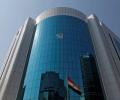
The Securities and Exchange Board of India (Sebi) on Monday relaxed the norms for valuing perpetual bonds. The norms, which had sought to value banks' deemed residual maturity of Basel III additional tier 1 (AT1) bonds as 100-year debt from April 1, were strongly opposed by the finance ministry. In a statement released on Monday, the regulator said the maturity would be 10 years until March 31, 2022, and would be increased to 20 and 30 years over the subsequent six-month period.

While a giant, it's a nimble-footed one, and is growing at a speed that even some of its private sector peers find enviable.
Between FY18 and FY24, it doubled its balance sheet. Despite being a late entrant in some segments, it has been able to grab market share, observes Tamal Bandyopadhyay.
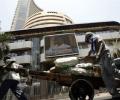
Except RIL and CIL, the remaining eight companies among the top 10 witnessed slump in their m-cap

Among the 11 equity sub-categories, thematic funds received the highest net inflows at Rs 9,017 crore, followed by smallcap funds at Rs 5,721 crore and flexicap funds at Rs 5,698 crore.

Fast-moving consumer goods (FMCG) companies are expected to witness pressure on volumes in the October-December quarter. However, price hikes will help push up revenues, said brokerages.For India's largest engineering firm, Larsen and Toubro (L&T), the analysts expect a 20 per cent growth in consolidated revenue, and an 8.1 per cent core business Ebitda margin, up 40 bps from a year ago.

In line with the broader market, shares of ONGC on Tuesday surged nearly one per cent to touch an intra-day high of Rs 1,415 thus, fuelling the market capitalisation of the firm to a whopping Rs 3,00,511 crore (Rs 3,005.11 billion) in the morning trade.

The sharp surge in investment accounts (folios) in midcap and smallcap mutual funds (MF) in recent months is likely driven by the do-it-yourself (DIY) investors. In the first five months of the present financial year (FY 2024), net folio additions in direct MF plans (4.5 million) has outpaced that in regular plans (3.9 million), contrary to the trend seen in the previous three six-month periods. The net folio additions in direct plans in the five-month period (April-August 2023) is 40 per cent higher than the total additions made in the previous six month period.

It has been a choppy calendar year 2022 (CY22) for global financial markets amid the spectre of rising inflation that led most central banks, especially the US Federal Reserve (US Fed), to tighten their monetary policy. Most equity indices across the globe have seen a sharp fall from their respective peak levels in this backdrop. FTSE India, for instance, has corrected 16 per cent from its October peak.

After a massive selloff in the shares of food delivery giants Zomato and Swiggy, analysts believe the time may be right for investors to start adding these stocks to their portfolio carts. Their optimism, they say, stems from the sharp correction in stock prices and valuations, which seem to have "over-baked" concerns about the two companies.

The 15 Indian entities listed on the New York Stock Exchange and Nasdaq saw their cumulative market value plummet.

Nine of the top-10 most valued domestic companies together added a whopping Rs 2,22,591.01 crore in market valuation last week, with heavyweights RIL, TCS and HDFC twins gaining the most. During the last week, the BSE benchmark Sensex rallied 1,690.88 points or 3.21 per cent. The index reached its all-time high of 54,717.24 on August 5. Barring Bajaj Finance, rest nine companies -- Reliance Industries Ltd (RIL), Tata Consultancy Services (TCS), HDFC Bank, Infosys, Hindustan Unilever Ltd (HUL), ICICI Bank, HDFC, State Bank of India and Kotak Mahindra Bank -- logged gains.
The ratio of market capitalisation to gross domestic product (GDP) in India remains elevated despite the recent correction in the equities markets. It was 147.5 per cent on December 3, 56 per cent higher than the 10-year average of 94 per cent. The current ratio is slightly lower than the all-time high ratio of 154 per cent at the end of September this year.

Equity benchmark indices Sensex and Nifty settled lower for the sixth straight session on Monday due to heavy selling in bellwether stocks including HDFC Bank and Reliance Industries amid mixed trends in the global markets and outflow of foreign funds. Falling for the sixth consecutive session, the BSE Sensex tumbled 638.45 points or 0.78 per cent to settle at 81,050. During the day, it plummeted 962.39 points or 1.17 per cent to 80,726.06. The NSE Nifty slumped 218.85 points or 0.87 per cent to end at 24,795.75.

'Investors with foreign currency-denominated goals, such as foreign education or foreign travel, should go for US equity funds.'
After two weeks of buying, FPIs turned net sellers in Indian equities this week, with a net withdrawal of Rs 976 crore amid a strengthening US dollar and steady rise in US 10-year bond yields, impacting investor sentiment. Foreign Portfolio Investors (FPIs) began the week on a positive note, investing Rs 3,126 crore in equities during the first two trading sessions (December 16-20).

'It won't be a V-shaped recovery. It'll be consolidation.' 'Investors might exit during that grind. It'll be painful.'

'There is a lot of interest from potential clients who have remained away from the markets in past years.' 'They are evaluating whether this is a good time to enter, especially since there are very few alternatives to earn meaningful returns.'

Once a quality stock has been bought, the next challenge is to hold on to it -- no mean feat in this age of information overload and incessant noise.

During the dot-com bubble, it had touched a high of 1.9.

About two-thirds of the incremental net income of the Nifty 50 over FY19-24 has come from companies in relatively low-valued sectors such as banks, diversified financials, IT services, and metals and mining.

Largecap companies are generally less vulnerable to economic slowdowns than their mid- and smallcap counterparts.

The process of merging Haldiram's Nagpur and Delhi branches to form Haldiram Snacks Food Private Ltd has been completed, informed its CEO Krishan Kumar Chutani on the social media platform LinkedIn. "A new chapter begins in the Haldiram story, and it's a significant one," Chutani posted on LinkedIn on Monday.
